Tuesday, August 25, 2015

A Thin Strip Of Land

A thin strip of land
Cutting through two opposite worlds
A threshold between having and wanting
A strip of land and some barbed wire
With tinkling glass, china and cutlery
This side of the land and ..
A meal a day or none at all
On the other side

A thin strip of land
Between unabashed opulence
And a pride impaired by chance
One knows not of hunger
And the other can only dream of satiety

A thin strip of land and some barbed wire
To separate the best fragrances
From the smell of the earth
A celebration of life or mere survival
With heavy pockets for some
Or a gleaming coin in the hot sun
For the starving multitudes ..

A thin strip of land
With slaves on either side
Slaves to luxury or to labour
Freedom on paper but bonded for life

A thin strip of land and some barbed wire
Thwarting, Piercing, Slashing, Crushing
The reason for such existence
A strip of land creating unequal worlds
Incarcerated by the inert morass
Hope lives on ..
By the banks of the holy river

A thin strip of land that brings home
A painful reconciliation to razor sharp reality
An accident of birth can place you
On either side of
The thin strip of land..

- M.Neog 

( Dew drops)

Tuesday, June 2, 2015

Vacations at Grandpa's

If someone needed to set his watch , he ought to have observed my Grandpa's routine. There couldn't have been a more accurate way of keeping time . In one of my posts , I had mentioned that he was a stickler for time . So, I decided to write about it today.

Vacations at Grandpa's are now beautiful memories of our childhood. The fun filled outings and sumptuous meals fitted into a well planned routine that stood on the pillars of punctuality and discipline.

Wing Commander M.K Dutt , my maternal grandfather was called  'Dadu' by us . His career in the RIAF and later IAF, took him on an adventurous trail stretching from Peshawar to Rangoon and a few years in Southern India.

Post retirement, he built a beautiful house in Kalyani , West Bengal; the compound had some fruit trees of the likes of Jackfruit , Grapefruit , Banana and such.

He earned considerable admiration and respect from the local community in the neighborhood . There may have been good reason for this since he was known to be very meticulous, disciplined and a man of scruples. I remember an occasion when he came back from the market and sat down to fill in the expenses in his notebook. He grew restless for he couldn't figure out how he had an extra rupee ! An hour of brain storming yielded a probable answer. So, he hopped on to his cycle and went back to the confectioner to return his rupee.

Dadu's day began at 3:30 am every single day of the week all through the year, until his last day. He filled up water in all the buckets and jars , since the municipality cut the water supply for a few hours in the morning every day in their area. Then he would get ready for his walk and be out of the house at 4:00 am sharp . In order to keep things undisturbed, he locked the collapsible gate from outside and threw the keys towards my grandma (didima) who had developed the skill to catch the bunch of keys sitting half asleep at the far end of the verandah!
With the rest of us  still asleep, Dadu was out with his cap, walking stick in one hand and a shopping bag in the other. He was tall and as straight as a ram rod. His military shoulders and long legs lent him an impressive gait . After the brisk walk, he'd return via the daily market for fish , vegetables , sweets and 'mishti doi' for us. Raw provisions were never stocked, always freshly bought.

Once back home, he'd call out from the gate for the keys , " Beee" to Grandma , whose name was Biva and the house was named Bivasree after her. From 5:30 to 6:30 , a few odd jobs such as lighting some coal fire and switching on the water pump and preparations for tea and breakfast, kept Dadu engaged .
Then exactly at the dot of 7:00 am sharp came the call "BREAKFAST!" on the rather confident assumption that we had woken up, brushed and were ready to sit at the table and join him for breakfast. I can't describe the feeling at that moment. Like zombies on fast forward mode , we were at the table within five minutes of that call !

"Good morning!" His enthusiasm set the tone for the day. Then came the soldier's breakfast ..corn flakes , milk , bananas, boiled eggs and toast. The breakfast menu was a constant like the Earth's rotation and revolution. It seemed next to impossible for us to finish our breakfast before an hour . I remember Dadu allowing us to  have our favorite 'Bonny Mix ' cereal that had finally triumphed over the corn flakes ! 

Breakfast done , it was time for an hour of Mathematics followed by music lessons , both tutored by Dadu himself . His love for Tagore's songs and poetry, many of which he had translated into English , made him the subject of veneration among his peers. Accordingly, most of his children , especially my mother , inherited the musical strain from him .

After the lessons were over, we were free to jump over the common boundary wall to play with the neighbor's kids . A bath at 12 pm was followed by lunch and an inescapable siesta. Evenings usually meant a walk to the park or visits to neighbors with our grandparents.

Dinner was usually over by 9:30. Then came the part of making arrangements for all of us to sleep. A large mattress was put out in the living room and the kids loved sleeping on it. The highlight of the evening would be the theatrics involved in hanging the mosquito net with a 6 feet tall Dadu holding a corner of the net while a 4feet some inches Didima was made to stand on a peg table and hold another end of it ! Sometimes, we slept with Didima , on the terrace . It was beautiful ; watching the star lit sky lying on earthy jute mats while Didima sang us to sleep..it was ethereal. 

They waited the whole year to have their children and grandchildren over for the vacations ..we were the little stars they longed to see , we lit up their world for a few days in a year .


Wednesday, October 29, 2014

A Post From Dad

Bonny arrived in tea in the spring of 1976 and apart from yours truly, there were Junu Rana and Nandan Kilpadi at the aerodrome. On being introduced to them, they asked her if she had seen a tea bush.The moment they knew that she hadn't, Junu pointed to the Sal trees on the other side of the runway at Tezpur airport and said that ladders were used to pluck leaves from those trees to make tea. On the way to Gogra bungalow, she saw a patch of guataemala and appreciated how well corn (Bhutta) grew in these parts ! Late in the evening,Bonny seemed perturbed by the sound of drums that seemed to be approaching the bungalow and stopping at the bungalow gate. Images of Phantom and the jungle tom tom flashed across her mind despite all my assurances. I brought her to the veranda, much to her consternation but to the delight of the tea garden workers. They gifted her a basket full of rice topped up with eggs, washed her hands, sang and danced for an hour or so before leaving, after gifts were exchanged.

After a decade with the old company and a few more years at a friend's property, we left for the Dooars/Terai. Social life in these parts was largely kept alive by planters from Duncans, ex agency house planters and some vivacious people ( non planters). As usual, Bonny was among the liveliest members like in the other clubs in Assam. Friends and associates still recall her generous hospitality. Bonny's Brinjal spread has traveled far and wide and is yet to be duplicated.
During our stay in the Terai, Bonny started teaching at The Good Shepherd Convent. In the nine years of her teaching at the school, some life long bonds were formed with her colleagues who admired her for her great organisational skills, meticulous planning, her sense of humour and her beautiful golden voice that belted out English, Hindi and Bengali songs with equal felicity. One of her favourite songs was Miriam Makeba's 'Malaika'.

Our stay in the Dooars from the early 90's was beautiful too. Bonny inspired many young ladies at The Central Dooars Club. She involved herself with some cultural events at the club. She had a zest for life and a deep sense of affection for all. The bungalow at Mogulkata T.E had a menagerie of pets which included three dogs, two ganders, two rabbits, a hare, a peacock and a small aviary. The carol singing sessions by the fireplace were memorable.

Post retirement, our life in Siliguri was quite relaxed in our cozy flat. Our daughters, Madhumita (married to Pranjal Neog) and Malavika (married to Sanjeev Shukla), have settled down well and have their beautiful families. Much of our lives revolved around our adorable grandsons,Dhritiman and Aahaan.

Things started changing with Bonny's health requiring frequent medical attention. It took a turn for the worse when she was diagnosed with end stage renal disease and a weak heart condition . She had to be hospitalized several times in the last year and a half. Bonny fought on courageously with all she had in her. She left for her heavenly abode on the evening of 24th September 2014, in the comfort of her home, surrounded by her loved ones.

May your loving soul rest in peace Bonny..

Monday, September 15, 2014

Rangoon Reminiscence

A frequent reminiscence of my maternal grandmother, 'Didima', paints an everlasting image of a lady who was more energetic than her grandchildren. The vim with which she executed household chores amazed us! As young kids, my sister and I counted the days for our Summer break to be with our maternal grandparents. It seemed so festive; most of my cousins would also visit them around the same time, setting the stage up for a melange of happy faces, fun and frolic,infused with liberal doses of humor; arising mostly out of amusement watching Didima scurrying around the house. Everything worked to clockwork timing in that house. Retired as a Wing Commander from the Indian Air force, my grandfather was a stickler for time and I could write quite at length about his punctuality, but I shall keep that for another day. Didima performed a range of activities through the day, from serving us meals to ensuring that the part timer cleaned every corner of the house, while she followed the victim of her suspicion around the house with precision. Once her vision enabled her to swipe out two peeled onions that were tucked firmly into the folds of the maid's saree as she sat down to grind spices for our meal. While the maid had to be content with less onions in her curry that day, Didima's epic discovery remained etched in our minds. Shuttling between the pantry and the dining table while serving meals, she would pause in front of us briefly with her usual refrain, "I'll be back in two shakes of a duck's tail!" She would always be the last one to eat her meals, owing partly to tradition and partly to her discomfort in using her dentures to eat. Dressed in a crisp red bordered cotton saree, her hair tied in a neat bun, she would complete the ensemble with a giant red dot on her forehead. She took us out to the parks in the evenings. As she stepped out of the gate, she would ensure that she had her dentures in place , just in case a neighbour's greeting necessitated a polite response. Her day began at 4 a.m every morning. She would run her fingers on our backs at bedtime and share reflections of her childhood in Rangoon. Born on 21st August, 1925, Didima was christened as Biva (Vibha) meaning ' cosmic light'.Her father, Rebati Raman Ghosh, was an Indian civil servant posted in Rangoon.The large Indian population in Burma was a legacy of the British empire. Burma had become a part of the British Indian dominion in 1895.She had eight siblings. Her recollections of Rangoon lent prismatic hues to our understanding of its landscape and culture. She grew up and attended primary and middle school in Rangoon. Burmese or 'Ba- maa - sa' was part of her curriculum. In Burma, they enjoyed prolonged monsoons and short dry spells of winter. The countryside was a tapestry of crop fields, mountains and rivers but the town had a curious blend of parks, lakes, pagodas and colonial structures. She would count from 1-10 in Ba-maa-sa and recite rhymes to entertain us. 'Minglaba!' ( Hello!) sounded so sweet in her voice. Then I loved the nasal sound 'thun-ya' ( derived from the Sanskrit 'Shunya')and she would continue, " tiet, hni..."(one, two). Her rare ability to learn languages, helped her to speak in Punjabi, Tamil and a bit of Russian that she picked up from a visiting delegation . As children they studied about the heroic exploits of King Mingdon and Thibaw. She told us that the world's best rubies ( called 'pigeon blood ruby' ) were mined from Burma. Through her accounts, the mind captured the verdant green of the flood plains above the Irrawady delta. She informed us about the palaces and monasteries of Ava, Mandalay. She handed down the recipe of the famous Burmese 'Khow Suey' which is still a family favorite. Like the devil in a fairy tale, the Second World War brought in a retrograde flow into their idyllic life in Rangoon. Air raid precautions were taken and trenches were dug out for safety. Regular safety drills were conducted in schools and offices. The bombing of Pearl Harbor shocked the world. News came in of Britain's greatest military humiliation- the fall of Singapore. The Allied forces failed to check Japan's steady advance through Thailand. Didima described the sight of numerous airplanes hovering in the night sky, their shimmering metal and flickering lights making them appear like fireflies, the sound was akin to an approaching swarm of bees. Then Japan blitzed Rangoon on the 23rd and the 25th of December 1941,pushing the British and Indian forces further North and cutting off the Burma Road that carried vital fuel and ammunition supplies. The fanatical courage with which the Japs attacked , created mass hysteria. The Indians in Rangoon were evacuated by the British. The exodus in 1941 took place either through the Arakan pass into the Chittagong hill tracts or across the Irrawady and Chindwin rivers into Manipur. Didima's family crossed over to Comilla via Chittagong in caravans and mule columns through the inhospitable terrain and climate of the Arakan. Dysentery and Malaria were rampant in the marshy, impenetrable jungles. Yet, it was Providence that, Didima's family was safely out of Rangoon. She completed her schooling at Comilla Government Girls' High School and got married two years later in 1943, at the age of 18. My grandfather had by then, served as a young Air force cadet in Rangoon. Those were the bloodiest days in his youth when he washed his face in choked basins full of earth and blood. His family hailed from Sripur, in Chittagong. My mother was the youngest of their five children. As a couple, my maternal grandparents stood out as a shining example of love, loyalty and commitment. A few souvenirs from Burma, like a lacquered cigar case , sits on my mother's bedside table now. Trapped in it , are the misty reminiscences of Rangoon..

Monday, September 8, 2014

Acid Jars and Tiger claws - Part 2

The two worst affected states by Partition were The Punjab and Bengal. Devastating levels of violence forced government attention to The Punjab were populations were exchanged on communal lines. Bengal remained neglected resulting in prolonged identity crisis and refugee influx from East Bengal, then under the reins of a newly born Pakistan. The government seemed incapable of handling the crises and many who lived through the trauma of Partition bore acrimony towards the government's indifference towards Bengal . 
The horrific experiences of women were kept hushed by families in a bid to hold onto the remaining threads of honour and tradition. The mass scale persecution annihilated the cultural and intellectual identity of the people, it changed the social fabric and destabilized the economy . All the garbage that was dished out with the truth hardly restored harmony; the prudence of the common man brought in some stability- the willingness to move on.
 The exodus of people from East Bengal does not even figure in the list of great refugee movements. Official figures are not available to this day. The truth is that The UN today recognises smaller refugee movements like those of Bosnia Herzegovina or Rwanda and Timor. The Partition of 1947 saw the largest migration in world history. The politics of Partition can be studied in state archives and documents but these do not reveal mass sentiment and grass root experience of those uprooted and humiliated. 
I leave you with the question of whether The Partition was avoidable. After all, it is in public knowledge that it was fuelled by the desire of a politically ambitious few. The millions displaced or massacred became mere pawns in the creation of a new geo political order that is still struggling to find solutions to its border disputes .

Acid Jars and Tiger claws - Part 1

This one's a bitter pill but something that needed a vent. In the late 80's, I'd spend the afternoons lazing beside my beautiful grandmother for a post lunch chat.She would help herself to some betel leaf from her mother's brass container(which is now with me). I'd wait eagerly for her to share her memories of youth and her recollections of life in an undivided Bengal. The conversation would centre around the Partition.. I was privy to her memories, a mix of sweet and sour, mostly acrid and unpleasant. Something in me made her confide. 
My grandparents belonged to the erstwhile aristocracy of East Bengal, that was dissolved and it's people displaced with ruthless precision due to the shortsightedness of the politics of power. My grandfather's family came from Jessore, my grandmother's family was from Barisal , both in undivided Bengal. My grandmother's father was a well known lawyer in Barisal. They grew up in great abundance but with even greater humility. She recalled the house in Jessore that she stepped into as a young bride just after completing her Intermediate. It was a red bricked double storied house with French windows and black marbled floors. The property comprised crop fields,ponds,fruit orchards and horses that my great grandfather loved to ride. The produce from the fields and the catch from the ponds catered to the needs of the household and the rest was given to villagers at nominal rates.
The family performed the Durga Puja in the house and the villagers were fed the 'bhog' in makeshift tents for 5 days. 
The utopia did not last too long. The Partition of Bengal resulted in the largest exodus in recorded human history. About 8 million people were displaced and worse, it shattered all notions of identity. People were forced to live as refugees in their own country. In a bid to flee, properties were put up at distress sales. Our house in Jessore was given away for an unrealistically paltry sum of a few hundred rupees. The land, was left behind. In most cases, properties were abandoned and occupied by strangers.I was told that our family just made it through with enough to buy a house in Calcutta.My great grandfather was a gynecologist in the British Indian army. He retired as a Captain. His knowledge and resources enabled him to set up his own practice at the house he bought in Calcutta on Harish Mukherji road. 
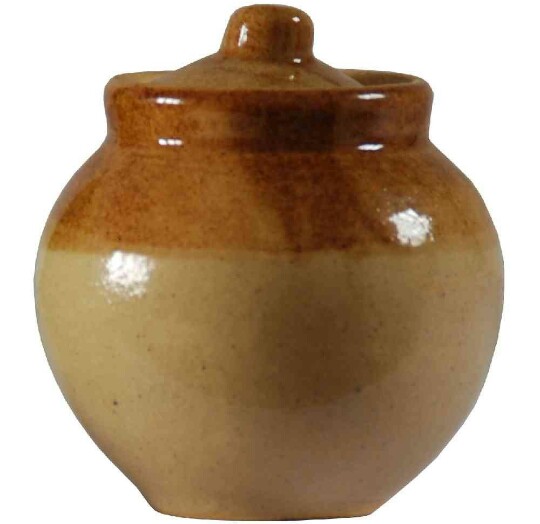
Helping herself onto another betel leaf, grandma asked me to water the plants growing in the ceramic acid jars in our house.On being asked about these jars, her face became grim.She revealed that when the riots broke out, houses would be stocked with acid jars and women would use it to intimidate dangerous intruders. While going to school , girls would fend off molesters with the 'bagh nakh' - it was a metallic claw like weapon that was worn in the fingers and remained hidden in the palm. It could tear open the enemy in an instant. The unspeakable atrocities against women during the Partition prompted such self defence.

Thursday, September 4, 2014

Grandma's Precious Pickles

Hello ! It's been an awfully long time since my last post. A bit of this and a bit of that, difficult to pull out from the web of life. However , it's so wonderful to be posting again ! It's interesting how one thought leads to another. Sometimes, in the late afternoons, I see a little girl twirling in a frock , on a terrace in a building nearby.The image transports me to my childhood in an instant.

During our pre teens, my sister and I would love the afternoons. It was a time shared by us exclusively; partaking of simple pleasures deepened our bonds. That which gave us unspeakable joy , was my grandma's home made pickles. She made quite an assortment of these with berries, mangoes , chillies and lemons. Mouthwatering ! Even the thought of it . We admired her skill. From a careful selection of the ingredients to the right time of the maturity of the pickles- her precision held us in awe. She would use a wooden bowl and spatula for mixing and sunning the pickles. The terrace was the perfect place for the pickles to mature.

So, my sister and I would wait for the family's siesta time to sneak up to the terrace and do justice to the pickles. Have you ever tasted pickles before they mature ? Dear me ! They're absolutely magical, certainly better than the finished product ; or so we'd think until we had attained maturity. I remember the berry and mango pickles were the most sought after. Big wooden bowls stuffed with pickle would be placed on straw mats to cook in the sun . The containers were covered with a thin muslin cloth. Occasionally grandma would come and stir the contents with a spatula and leave them covered again. She would bring the pickles out in the sun after breakfast and carry them back carefully just before sunset. She wasn't as possessive about her jewelry as much as her pickles !

The mellow afternoon sun gave a comfort that was only second to my mother's lap. There we were, sitting on the terrace, slowly lifting the covers over the bowls and digging our fingers into the young pickles. The burst of sweet , sour and salty flavors bathing our palettes, secrets shared in hushed tones followed by giggles, defined happiness. Ears remained propped up for the slightest sound of footsteps, for fear of being chased with anything within reach, for indulging in the sacrilege of touching young pickles ! Care had to be taken to keep the pickles and covers back with dexterity so as to avoid any suspicion . The feeling of triumph was often accompanied by a twirling of our frocks, spinning round and round, holding on to each other firmly, until the world seemed to spin around us and a tacit understanding that our secrets would remain safely guarded.

So grandma never caught us stealing a taste of the pickles. Well, if she's watching us from somewhere up in the heavens,  I admit the guilt of stealing her magical pickles and ask for her forgiveness .
I enjoyed bringing this out into the open. Twirling their frocks in the mellow sun, two sisters bonded deeply over a taste of grandma's magical pickles ...